Blog
Content distribution strategies that help your best work reach more people
Great content does not automatically find an audience. The teams that win distribution do not just publish more — they build repeatable systems for turning one content asset into a multi-channel growth engine.
Start with a distribution-first mindset
Many teams still create content first and think about distribution afterward. That creates a gap between the effort spent creating content and the actual audience that sees it. A stronger model is to plan distribution before the content goes live.
When you decide upfront how an article, launch, update, or video will appear across platforms, you can tailor the message format, CTA, and timing without rebuilding the workflow later.
- Plan where each content asset should appear before publishing
- Adapt the message to each platform while keeping the core idea aligned
- Use a consistent CTA so distribution supports a measurable goal
Build a repeatable channel mix
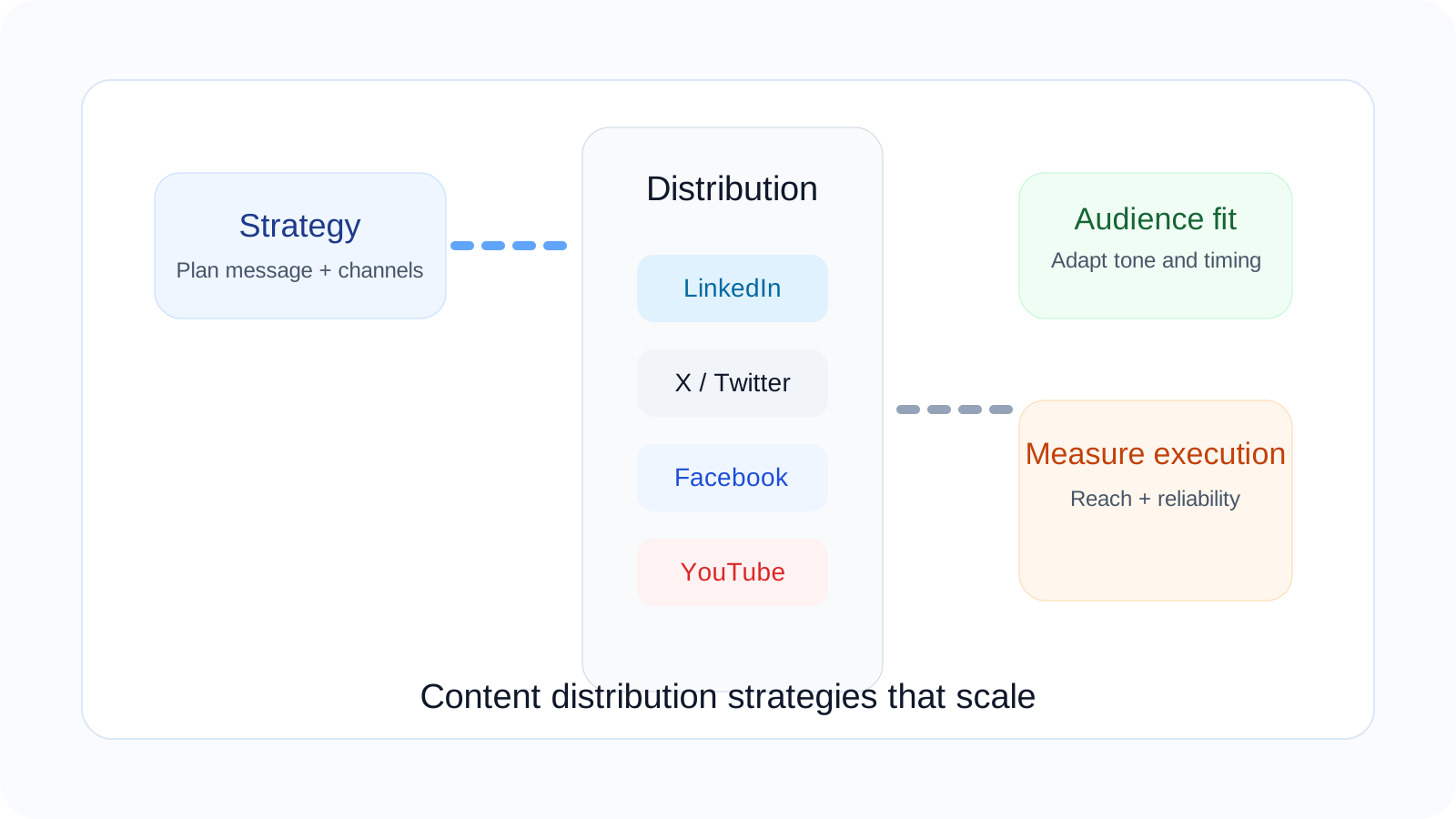
The strongest distribution strategies use a channel mix instead of depending on one platform. LinkedIn may drive authority, X may drive conversation, Facebook may help community reach, Instagram may support visuals, and YouTube may extend long-form visibility.
A channel mix gives you resilience. If performance drops on one platform, your content still has reach elsewhere. It also helps different audience segments discover the same idea in the places where they already spend time.
- Primary channels for direct reach and engagement
- Secondary channels for audience overlap and long-tail visibility
- Recurring distribution windows for evergreen content refreshes
Measure execution, not just impressions
Most teams focus only on likes, views, or clicks. Those numbers matter, but operational metrics matter too. If your team cannot reliably publish to all planned platforms, your strategy breaks down before performance can even be measured.
That is why strong distribution strategies combine reach metrics with execution metrics: how fast content goes live, how many channels were actually published, how often distribution gets delayed, and where workflow friction appears.
- Track which platforms were included on each campaign
- Measure publishing speed from content ready to content live
- Review failures, skipped channels, and scheduling misses regularly
Next step
Turn strategy into a repeatable workflow
mypostshare helps teams operationalize content distribution with hosted OAuth, connected accounts, and one publishing flow across supported platforms.